Honeycomb activated carbon is a kind of highly efficient adsorbent with unique structure and has wide application prospect.
Honeycomb activated carbon is mainly made of high quality coal-based activated carbon as raw material, pressed by honeycomb mold and fired at high temperature. The preparation process also includes carbonization activation method, template method, chemical vapor deposition method and gel impregnation method.
contactis a highly efficient adsorbent with a unique structure and a wide range of applications.
The following is a detailed introduction to honeycomb activated carbon:
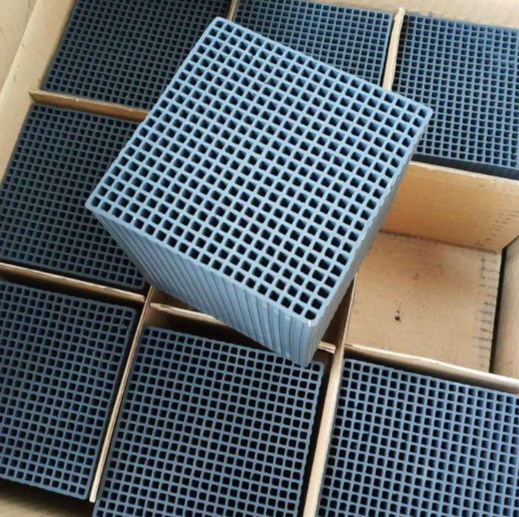
Raw materials and preparation:
Honeycomb activated carbon is mainly made of high-quality coal-based activated carbon as raw material, which is pressed by honeycomb molds and fired at high temperature. The preparation process also includes a variety of methods such as carbonization and activation, template method, chemical vapor deposition method and gel impregnation method. The selection of these methods depends on the expected pore structure, surface properties and application requirements.
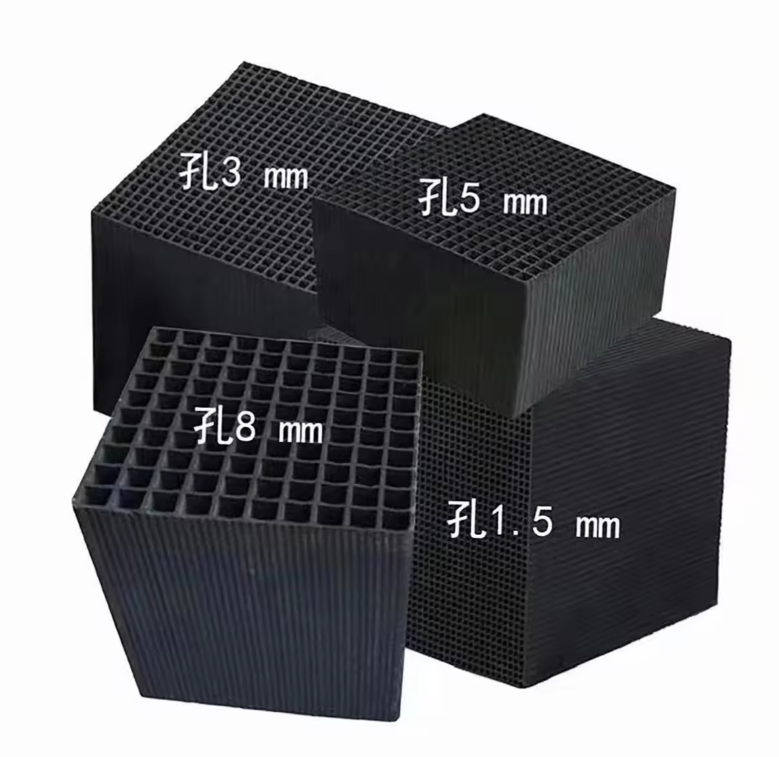
Structural characteristics:
Honeycomb activated carbon has a honeycomb appearance and contains a large number of pores inside, which makes its specific surface area much higher than other adsorbents, thus having better adsorption performance. It has the characteristics of high specific surface area, uniform pore size distribution, small through-hole resistance and developed micropores.
Performance advantages:
High adsorption capacity: Honeycomb activated carbon can effectively adsorb harmful gases and pollutants such as formaldehyde, benzene, ammonia, carbon dioxide, etc.
Water resistance, strong acid and alkali resistance: Honeycomb activated carbon that has been treated with water resistance and secondary firing can be widely used in wastewater treatment, organic solvent recovery adsorption, and various catalyst carriers.
Long service life: Due to its unique structure and good adsorption performance, honeycomb activated carbon can still maintain a high adsorption efficiency after long-term use.
Application areas:
Air purification: Honeycomb activated carbon can be used in air purifiers, air filters, in-car air purification systems, etc., to effectively remove harmful gases, odors and pollutants in the air. Waste gas treatment: In the fields of industrial waste gas treatment, automobile exhaust treatment, sewage treatment, etc., honeycomb activated carbon can remove harmful substances in waste gas and improve environmental quality.
Food and beverage processing:
In the process of food and beverage processing, honeycomb activated carbon can be used for processes such as decolorization, deodorization and removal of harmful chemicals. Medical and health: Honeycomb activated carbon is widely used in the fields of oral fresheners, oral medical materials, disinfectants, etc., which can adsorb and decompose toxic and harmful gases and remove odors.
Application of honeycomb activated carbon in VOC gas treatment
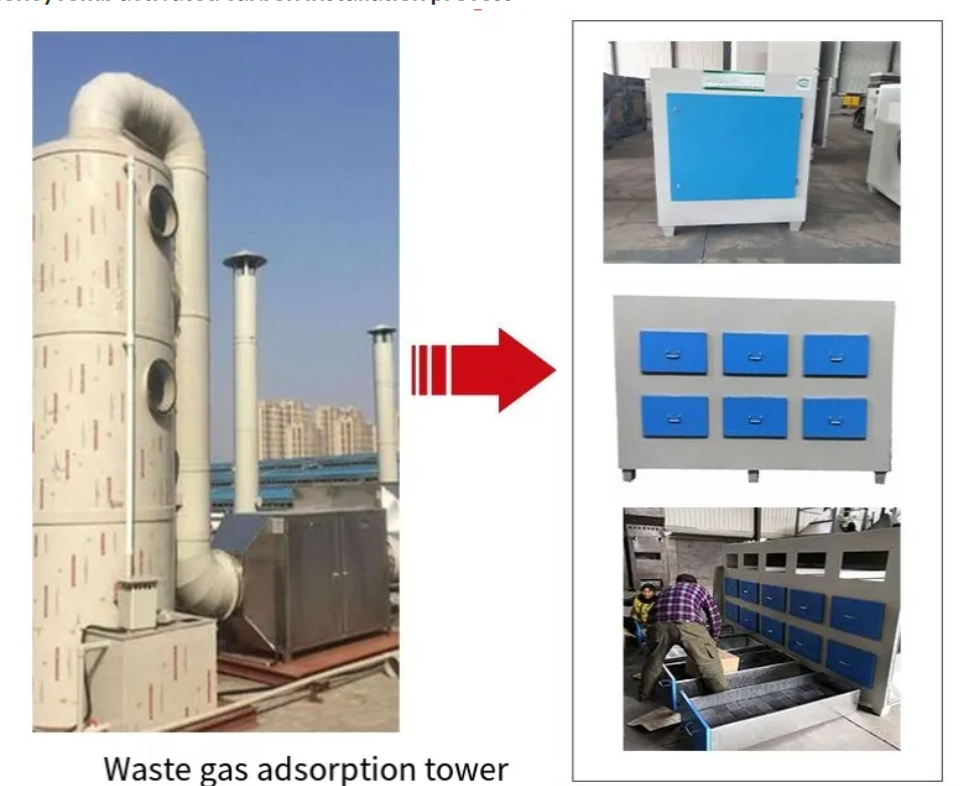
I. Introduction
With the acceleration of industrialization, the emission of volatile organic compounds (VOCs) is becoming increasingly serious. VOCs not only pollute the environment, but also harm human health. Therefore, it is particularly important to find an efficient and economical method for VOCs treatment. As a new type of high-efficiency adsorbent, honeycomb activated carbon has shown unique advantages in the field of VOC gas treatment. This article will discuss the principle, application and effect of honeycomb activated carbon in treating VOC gas.
II. Overview of honeycomb activated carbon
Honeycomb activated carbon is a porous carbon material made of high-quality carbonized material and processed by special technology. It has a honeycomb appearance, rich pore structure inside, large specific surface area and strong adsorption performance. These characteristics make honeycomb activated carbon have broad application prospects in the field of VOC gas treatment.
III. Principle of honeycomb activated carbon in treating VOC gas
The principle of honeycomb activated carbon in treating VOC gas is mainly to utilize its porous structure and strong adsorption capacity. When VOC gas passes through honeycomb activated carbon, the organic molecules in the gas will be adsorbed by the pores on the surface of the activated carbon, thereby achieving the purpose of purifying the gas. In addition, honeycomb activated carbon also has a certain catalytic effect, which can convert the adsorbed organic molecules into harmless substances under certain conditions, further improving the treatment effect.
4. Application of honeycomb activated carbon in VOC gas treatment
Industrial waste gas treatment Industrial waste gas often contains a large amount of VOCs, which has a serious impact on the environment and human health. Honeycomb activated carbon can be used in industrial waste gas treatment equipment to effectively remove VOCs in waste gas, reduce emission concentrations, and meet environmental protection requirements.
Printing and coating industry waste gas treatment The printing and coating industry will produce a large amount of waste gas containing VOCs during the production process. Honeycomb activated carbon can be used in the waste gas treatment system of these industries to remove VOCs in waste gas through adsorption, improve the working environment, and reduce health hazards to employees.
Petrochemical industry waste gas treatment The waste gas of the petrochemical industry contains a variety of harmful VOCs, such as benzene, toluene, xylene, etc. Honeycomb activated carbon can be used in waste gas treatment devices in the petrochemical industry to remove VOCs in waste gas through adsorption and catalysis, reducing pollution to the environment.
V. Effect of honeycomb activated carbon in treating VOC gas
Studies have shown that honeycomb activated carbon has a high adsorption capacity and removal rate when treating VOC gas. Its treatment effect is affected by many factors, such as the pore size distribution, specific surface area, adsorption temperature, gas concentration, etc. of the activated carbon. In practical applications, by optimizing operating conditions and selecting appropriate activated carbon models, higher VOCs removal rates and lower operating costs can be achieved.
The application of honeycomb activated carbon in aquariums is mainly reflected in the purification and improvement of water quality. The following is a detailed analysis of its application: 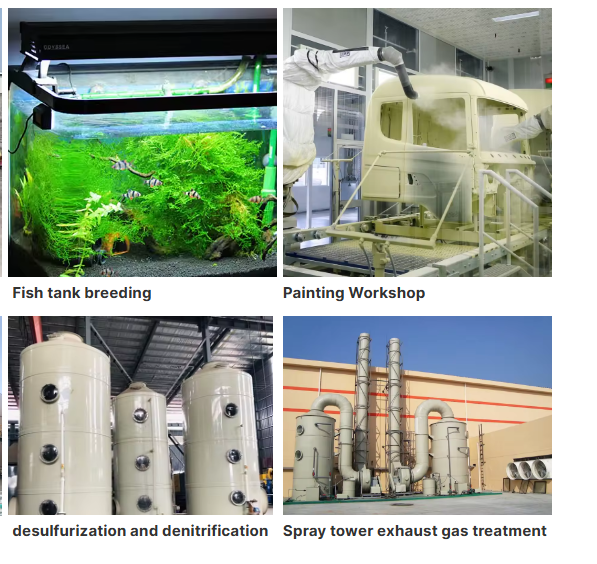
1. Water purification
Removal of harmful substances:
Honeycomb activated carbon has extremely high specific surface area and adsorption capacity, and can effectively remove harmful substances in water, such as chlorine, organic matter, heavy metal ions, etc. These substances are harmful to the health of aquatic organisms, and the adsorption of honeycomb activated carbon can significantly reduce the concentration of these substances, thereby improving water quality. Remove odors and impurities: Aquarium water often produces odors and impurities due to fish excrement, food residues, etc. Honeycomb activated carbon can absorb these odor molecules and suspended particles, making the water clearer and more transparent, and providing a good living environment for aquatic organisms.
2. How to use
Use in filters: In aquarium filters, honeycomb activated carbon can be added as filter media. When water flows through the honeycomb activated carbon, harmful substances, odors and impurities will be adsorbed in the pores of the activated carbon, thereby purifying the water. Wrapping and use: For smaller aquariums or special filtration equipment, the honeycomb activated carbon can be wrapped in a mesh bag, etc., and then placed in the water. This can prevent the activated carbon from coming into direct contact with aquatic organisms, while at the same time playing its role in purifying water quality.
3. Precautions
Cleaning and replacement: Before use, honeycomb activated carbon should be cleaned to remove dust and impurities on the surface. During use, since activated carbon will gradually become saturated, it needs to be replaced regularly to ensure its continued and effective purification capabilities. It is generally recommended to replace it 1-2 times a month. Avoid high temperatures: High temperatures will reduce the adsorption capacity of honeycomb activated carbon, so you should avoid exposing activated carbon to high temperatures during use.
Applicability considerations: If the water quality of the aquarium is already in ideal condition, using honeycomb activated carbon may reduce the necessary microorganisms, herbs and other beneficial elements in the water quality, adversely affecting the health of the fish. Therefore, water quality should be assessed before use to ensure the suitability of activated carbon.