How to Prevent Blockage of Slurry Pumps During Operation?
Discover effective strategies to prevent slurry pump blockages and ensure uninterrupted operation! This article offers essential maintenance tips, monitoring techniques, and best practices designed to enhance pump performance and longevity.
In various industrial sectors, slurry pumps play a critical role in transporting pulp containing solid particles, fibers, and other impurities. Their stable operation is of utmost importance. Once blocked, not only will production efficiency be affected, but equipment damage may also occur, leading to significant economic losses. Therefore, effective measures must be taken to prevent blockages throughout the entire process, from the selection and installation of slurry pumps to medium pretreatment and operational maintenance during use.
I. Reasonable Type Selection and Installation
(1) Correct Type Selection
The selection of Anti-static Carbon Fiber Brush is the primary step in preventing blockages. The properties of the medium vary widely across different industrial scenarios, including the size, concentration, hardness, and corrosiveness of solid particles, as well as the viscosity and temperature of the pulp. Only by selecting appropriate slurry pump models and specifications based on these specific parameters can the risk of blockage be fundamentally reduced.
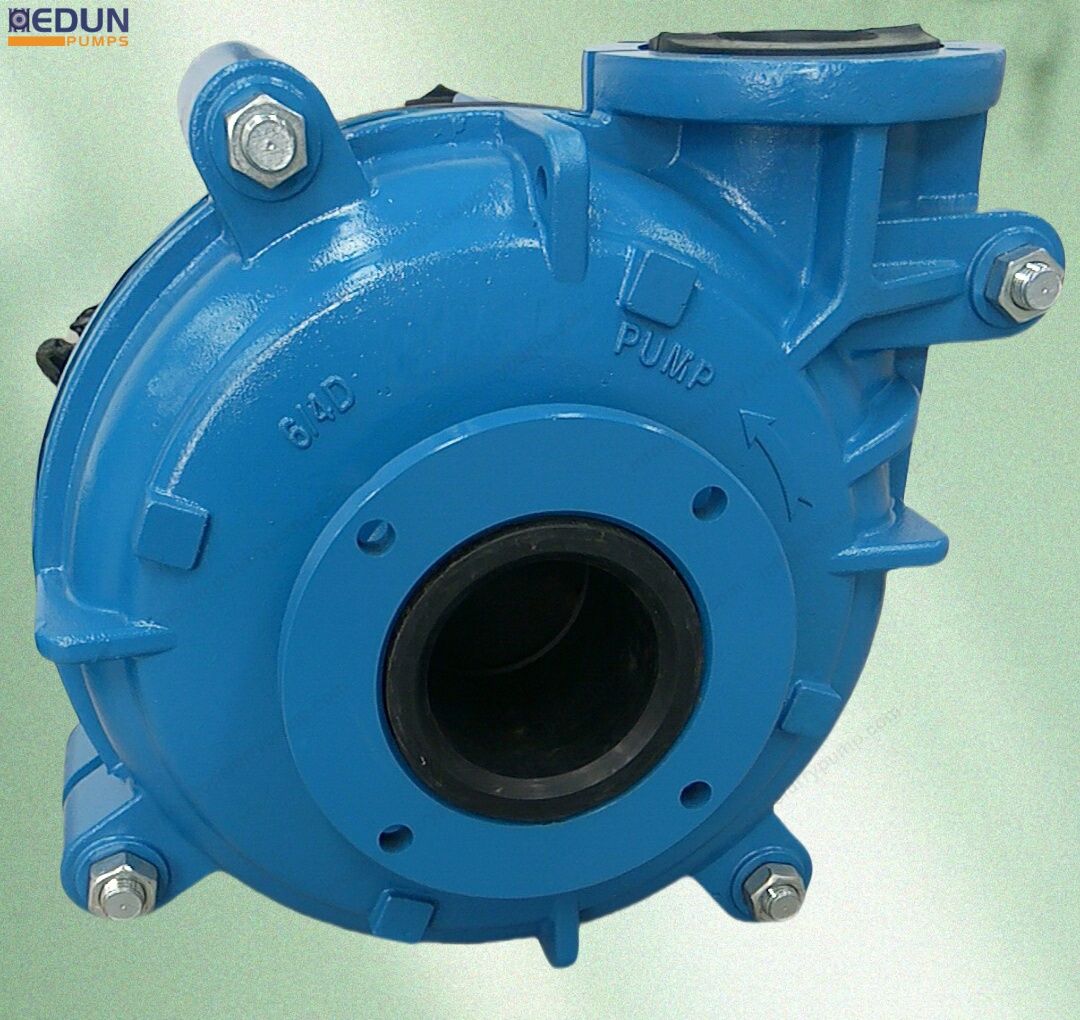
When selecting a slurry pump, full consideration should be given to the dimensions and structures of the slurry pump's flow-through components, such as the impeller, volute, and suction chamber. The passage dimensions of these components must be sufficiently large to ensure that particles in the medium can pass through smoothly. For example, in mineral processing plants, the slurry often contains relatively large ore particles. In such cases, the selected slurry pump must have an impeller inlet diameter, blade spacing, and volute flow channel width that can accommodate these particles, avoiding blockages caused by particle retention and accumulation due to insufficient flow capacity.
Additionally, the corrosiveness of the medium cannot be ignored during the selection process. If the slurry is highly corrosive, using a slurry pump with ordinary materials will quickly corrode and damage the flow-through components, generating metal debris and other impurities that may exacerbate slurry pump blockages. Therefore, suitable materials should be selected based on the medium's corrosiveness, such as wear-resistant and corrosion-resistant high-chromium cast iron or rubber linings, to ensure the slurry pump's long-term stable operation and reduce blockages caused by impurities from component damage.
(2) Optimal Installation
Reasonable installation is equally important for preventing slurry pump blockages. During installation, first, ensure that pipeline connections are secure and well-sealed. Loose or poorly sealed pipeline connections may allow external foreign objects, such as bolts, welding slag, and rust, to enter the pump body. Once these foreign objects enter the slurry pump's flow-through components, they can easily become stuck between the impeller and volute, between the blades, or in the suction chamber, causing blockages.
Second, the pipeline layout and slope design must be scientifically reasonable. When slurry flows through pipelines, excessive bends or overly long horizontal sections can cause solid particles in the slurry to settle. For example, in the slurry transportation system of a chemical enterprise, if the horizontal pipeline is too long and lacks a sufficient slope, particles will gradually settle at the bottom of the pipeline as the slurry flow rate decreases, forming deposits that not only reduce the pipeline's flow area but may also cause pipeline blockages, thereby affecting the normal suction and transportation of the slurry pump. Therefore, pipelines should be kept as straight as possible to minimize unnecessary bends, and a suitable slope should be designed based on the medium's characteristics to facilitate smooth slurry flow and prevent particle sedimentation.
Furthermore, attention should be paid to the slurry pump's installation position and height. Excessively high pump suction height may reduce suction performance and cause cavitation. The collapse of cavitation bubbles can impact and damage flow-through components, generating metal particles and other impurities that increase the likelihood of internal slurry pump blockages. At the same time, cavitation can also lead to unstable pump flow and head, affecting normal slurry transportation and indirectly increasing the risk of blockages.
II. Medium Pretreatment
(1) Impurity Filtration
Installing appropriate filters or strainers at the inlet of slurry pumps is an effective measure to intercept large solid particles, fibers, and other impurities. Different industrial scenarios require different types of filtration equipment based on the type and size of impurities in the medium.
For example, in the slurry pump systems of mineral processing plants, where ores may contain large debris such as branches, packaging fragments, and large ore blocks, grid-type filters are typically installed. The grid spacing of these filters is determined based on the maximum particle size allowed to pass through the pump, effectively intercepting large debris and preventing them from entering the pump body. In some applications with stricter impurity size requirements, such as chemical production, basket filters or bag filters may be used to filter out smaller particles and fibrous impurities.
Filter maintenance is also crucial. During operation, filters continuously intercept impurities, which gradually accumulate and block the filter holes over time, increasing pump suction resistance and reducing flow. Therefore, filters need to be regularly inspected and cleaned, with a reasonable cleaning cycle determined based on the impurity content and properties of the medium. During cleaning, all debris attached to the filter must be thoroughly removed to ensure the filter's normal operation and effectively fulfill its role in intercepting impurities.
(2) Particle Size Control
Exceeding the allowable particle size range of the slurry pump is one of the main causes of slurry pump blockages. Therefore, the particles in the medium must be pretreated to ensure their sizes are within the slurry pump's applicable range.
For media containing excessively large particles, pretreatment methods such as screening and crushing can be used. Screening is a common method. In construction mud transportation, for example, mud may contain excessively large particles such as stones and brick fragments. Pretreating the mud with a vibrating screen can remove these oversized particles, ensuring that the particle size of the mud entering the slurry pump meets the requirements. The screen mesh size of the vibrating screen is selected based on the maximum particle size allowed to pass through the pump, ensuring that only particles of qualified size pass through the screen.
Crushing is suitable for materials that are relatively large in size but have certain crushability. For example, in mining, some ore particles may be too large for the slurry pump's allowable size. In such cases, crushers can be used to crush the ore to an appropriate size before transportation. The selection of crushing equipment should be based on factors such as the ore's hardness and properties. For example, jaw crushers are suitable for crushing hard ores, while impact crushers are suitable for crushing medium-hardness ores.
Through pretreatment methods such as screening and crushing of the medium, particle size can be effectively controlled, reducing slurry pump blockages caused by oversized particles.
III. Operational Maintenance Management
(1) Regular Inspection and Cleaning
During the operation of slurry pumps, regularly inspecting and cleaning components such as inlet and outlet pipelines, impellers, and volutes is an important maintenance measure to prevent blockages.
Inlet and outlet pipelines are the channels for slurry flow. After long-term operation, sticky substances and deposited particles may adhere to the inner walls of the pipelines, reducing the pipeline's flow area, increasing flow resistance, and even causing pipeline blockages. Therefore, inlet and outlet pipelines need to be regularly inspected to observe whether there are obvious scaling and sedimentation phenomena on the inner walls. For mild scaling, cleaning can be done by increasing the flow rate for flushing; for severe scaling, the pipeline needs to be disassembled for manual cleaning.
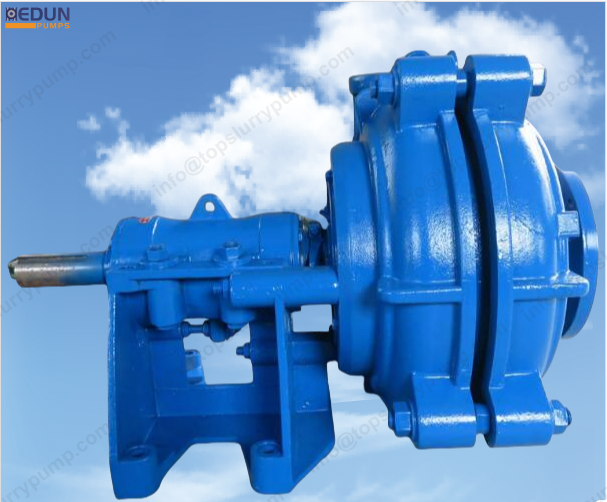
The impeller is the core component of the slurry pump and is directly exposed to the medium. Particles and impurities in the medium easily accumulate between the impeller blades and between the blades and the front and rear covers. Especially when the medium contains fibrous impurities, they can easily wrap around the impeller, affecting its rotation and causing blockages and efficiency reduction. As a flow-guiding component, the volute's flow channel may also have particle deposits. Therefore, during inspections, the impeller and volute must be carefully checked for debris accumulation and fiber wrapping, and timely cleaning must be carried out upon discovery. During cleaning, care must be taken to avoid damaging the surfaces of the impeller and volute, which could affect their performance and service life.
(2) Monitoring Operational Parameters
Closely monitoring operational parameters such as flow rate, pressure, and current of the slurry pump is key to timely detecting blockages and other faults. These parameters can intuitively reflect the slurry pump's operational status, and abnormal changes in parameters may indicate blockages.
Flow rate is an important indicator of a slurry pump's conveying capacity. When the slurry pump's flow-through components are blocked, the flow area decreases, and the flow rate will suddenly drop. For example, if the impeller is blocked by particles or wrapped by fibers, the impeller's pushing effect on the slurry will weaken, resulting in reduced output flow. Pressure parameters can also reflect the slurry pump's operational status. During normal operation, pressure should remain relatively stable. If the inlet pipeline is blocked, the suction pressure will decrease; if the outlet pipeline or the pump itself is blocked, the discharge pressure will fluctuate or increase. Current is related to the slurry pump's power consumption. When the slurry pump is blocked, the rotational resistance of the impeller increases, and the motor current will rise.
When abnormal changes in these operational parameters are detected, the slurry pump should be shut down immediately for inspection and maintenance. For example, when the flow rate suddenly drops and cannot be restored by adjusting the valve, or when the pressure fluctuates significantly and the current continues to rise, it may indicate a blockage or other faults in the slurry pump. Immediate shutdown is required to inspect the slurry pump's inlet and outlet pipelines, impeller, volute, and other components, identify the blockage point, and carry out cleaning to prevent the fault from escalating.
(3) Control of Operational Speed
The operational speed of slurry pumps must be reasonably controlled based on the medium's characteristics and the slurry pump's performance. Both excessively high and low speeds may increase the risk of blockages.
When the speed is too high, the (scouring) effect of particles in the medium on the slurry pump's flow-through components intensifies, accelerating wear on components such as the impeller and volute. At the same time, excessively high speeds can cause particles to flow too fast inside the slurry pump, easily forming eddies that lead to particle accumulation in eddy areas, increasing the likelihood of blockages. For example, when transporting slurry containing larger particles, excessively high speeds can increase the impact force of particles on the impeller blades, causing not only wear but also potential particle sedimentation and blockage due to eddies formed on the back of the blades.
When the speed is too low, the flow rate of the medium inside the slurry pump decreases, making it easier for solid particles to settle due to gravity in the impeller, volute, or pipelines, causing sedimentation blockages. Especially for high-concentration slurries, excessively low speeds can deteriorate the slurry's fluidity, making particles more prone to settling. Therefore, suitable operational speeds must be determined based on the medium's concentration, particle size, and other characteristics, as well as the slurry pump's design performance, to ensure that the medium flows at a reasonable speed inside the slurry pump, avoiding both excessive scouring wear and particle sedimentation blockages.
In actual operation, speed adjustments can be made by monitoring the slurry pump's operational parameters and observing the slurry transportation status. For example, when slight sedimentation signs are detected in the pipeline, the speed can be appropriately increased to enhance slurry fluidity; when excessive wear on flow-through components is observed, the speed can be reduced to minimize scouring wear.
Conclusion
Preventing blockages in slurry pumps during operation is a systematic task that requires comprehensive measures in multiple aspects, including type selection and installation, medium pretreatment, and operational maintenance management. Only by strictly controlling each link can the risk of blockages be effectively reduced, ensuring the stable operation of slurry pumps and providing a strong guarantee for the smooth progress of industrial production