Senegalese Customers Inspect African Clay Brick Machines and Explore New Opportunities for Green Building Materials
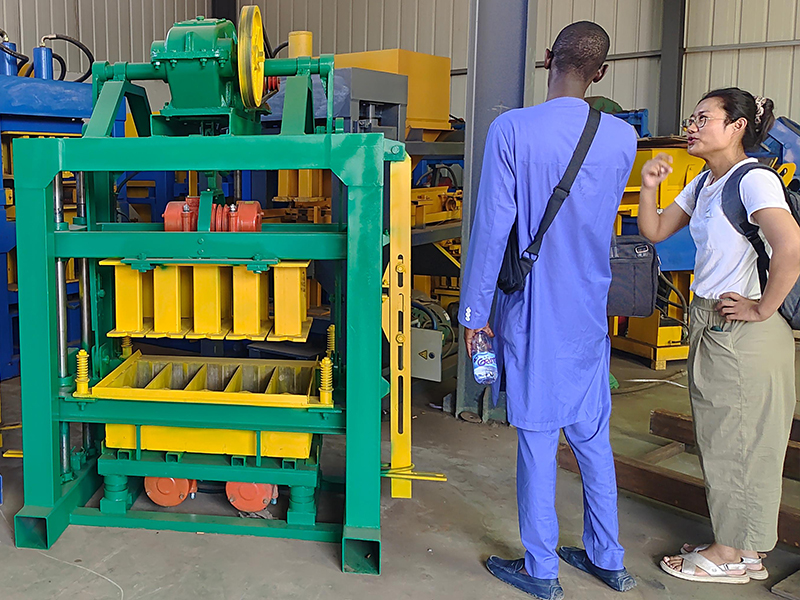
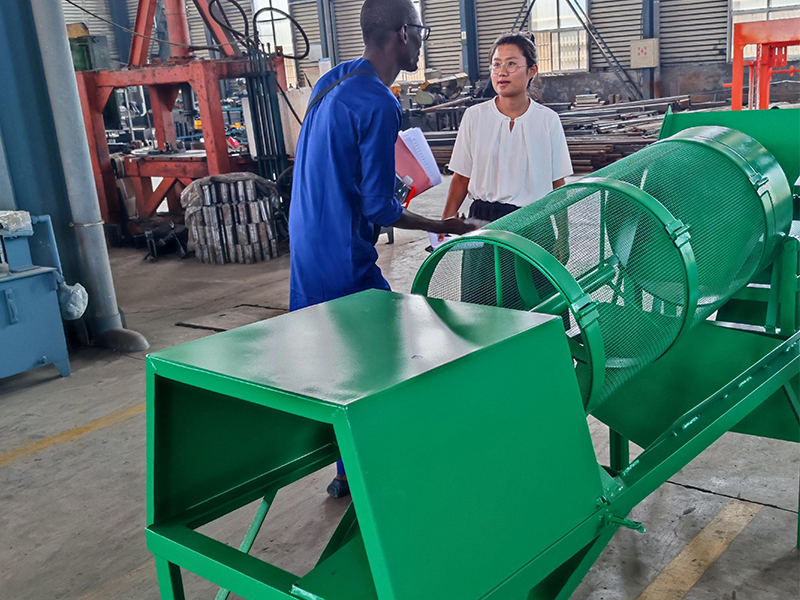
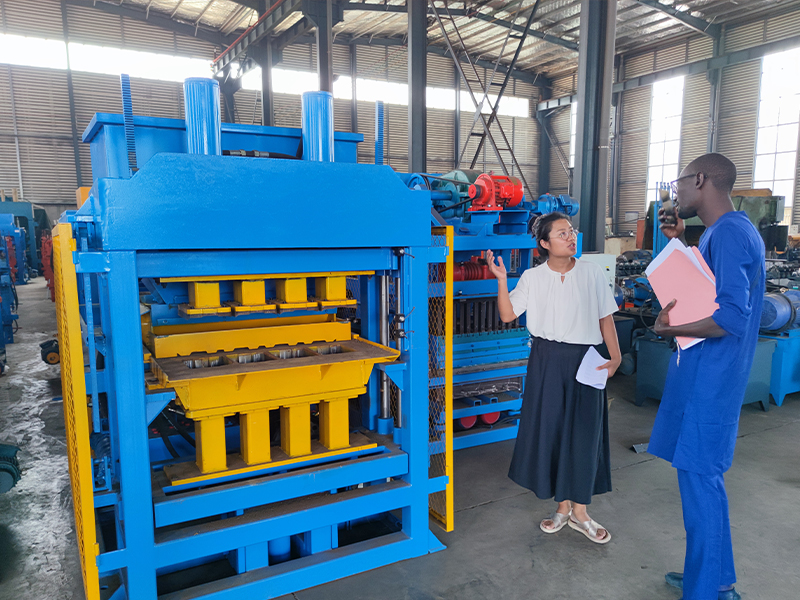
In a recent development, Senegalese customers, driven by the pursuit of harnessing the locally abundant, uniquely high - viscosity clay resources in tandem with cement to fabricate high - strength clay - cement bricks, made a special journey to conduct an in - depth scrutiny of our company's state - of - the - art African clay brick machines.
In a recent development, Senegalese customers, driven by the pursuit of harnessing the locally abundant, uniquely high - viscosity clay resources in tandem with cement to fabricate high - strength clay - cement bricks, made a special journey to conduct an in - depth scrutiny of our company's state - of - the - art African clay brick machines. These innovative clay - cement bricks, boasting low production costs, top - notch quality, and performance on par with traditional cement bricks, are brimming with potential for revolutionising the local construction market.
Throughout the inspection, the customers were visibly captivated by the machinery on display. Our technical experts commenced with a comprehensive exposition of the brick machines' core operational principles, delving deep into their multifaceted performance advantages. Notably, the machines are outfitted with an internationally acclaimed intelligent proportioning system. This cutting - edge system has the prowess to precisely calibrate the clay - cement mixture ratio, taking into account the unique characteristics of each batch of clay. As a result, every clay - cement brick that rolls off the production line consistently meets the highest strength benchmarks, making it suitable for a wide array of exacting construction projects. Additionally, a detailed demonstration of the operation process was carried out. The simplicity and fluidity of the steps left no doubt in the customers' minds about the equipment's user - friendliness.
This African clay brick machine is not merely a technological marvel but also a paragon of environmental responsibility. During the manufacturing process, through meticulous optimisation of the power system and production techniques, energy consumption is drastically slashed, and carbon emissions are effectively curbed. This not only paves the way for the local construction industry to embrace a green and sustainable development trajectory but also underscores our company's commitment to global environmental stewardship. Moreover, the machine's intuitive operation interface ensures that local production and operation are a breeze. Ordinary workers can quickly master the operation skills after a brief training session, substantially reducing both labour costs and the training period.
The customers closely observed the on - site operation demonstration of the brick machine and were effusive in their praise for the quality of the produced clay - cement bricks. On - site tests revealed that these bricks exhibit a compressive strength far surpassing the industry average. Their performance in durability tests was equally impressive. Even after enduring simulated harsh environmental conditions, all performance indicators remained rock - solid, guaranteeing that they can fully meet the stringent requirements of various construction projects in Senegal, be it residential developments or large - scale commercial complexes.
The visit and inspection by the Senegalese customers on this occasion serve as a resounding testament to their high regard for our company's technical acumen and product excellence. We are eagerly anticipating the establishment of in - depth cooperation with these customers. Together, we aim to spearhead the large - scale adoption of clay - cement bricks in Senegal. This collaborative effort will not only infuse new vigour into the local construction industry, offering superior - quality and more cost - effective building materials, but also propel local infrastructure construction to new heights. Simultaneously, it will expand our company's footprint in the burgeoning field of green building materials, contributing significantly to global sustainable development initiatives.
African Clay Brick - making: Traditional Techniques and Modern Developments
Introduction
In Africa, clay brick - making, as an ancient yet continuously evolving method of producing building materials, is widely applied in the fields of residential and infrastructure construction. Using clay as the main raw material, it manufactures bricks that meet construction requirements through unique techniques, playing a crucial role in the development of the African construction industry.
Characteristics and Distribution of African Clay Resources
The African continent is rich in clay resources, which exhibit diverse characteristics in terms of mineral composition, particle size distribution, and chemical properties. From a mineralogical perspective, common clay minerals include kaolinite, montmorillonite, and illite, etc. In terms of particle size distribution, the fineness of clay varies in different regions, which has a significant impact on the molding performance during the brick - making process and the quality of the final products. For example, in some parts of sub - Saharan Africa, the clay contains a high proportion of fine particles and has good plasticity, making it suitable for traditional hand - made brick - blank techniques. However, in some desert - fringe areas of North Africa, the clay may contain more sandy components and requires appropriate treatment during brick - making.
Geographically, the areas around the East African Rift Valley, the Niger Delta in West Africa, and some plateau regions in South Africa are all areas rich in clay resources. These areas have abundant and easily - exploitable clay reserves, providing a solid material foundation for the local clay brick - making industry.
Analysis of Traditional Clay Brick - making Techniques
Raw Material Pretreatment
In traditional techniques, the mined clay is first pretreated. Impurities such as stones and plant roots are removed through processes like screening and stirring, and the humidity of the clay is adjusted simultaneously. During this process, manual stirring or simple mechanical stirring equipment is usually used to ensure that the humidity of the clay is uniform and reaches a state suitable for brick - blank making. Generally, the humidity is controlled between 20% and 30% to ensure good plasticity.
Brick - blank Molding
Brick - blank molding is a key link in clay brick - making. The common molding method is hand - made, using wooden or metal molds. Workers fill the pretreated clay into the molds and compact it by hand to make the clay closely fit the shape of the mold and form brick - blanks with specific dimensions. Although this hand - made brick - blank method has a low efficiency, it can make full use of local human resources and has low requirements for equipment, which is suitable for the economic and technological levels of some regions in Africa.
Drying and Firing
After the brick - blanks are formed, they are first dried naturally. The brick - blanks are neatly arranged in an open area, and the water in the brick - blanks gradually evaporates by taking advantage of the abundant solar energy and dry climate conditions in Africa. The drying time usually ranges from 5 to 10 days, depending on the local climate and the size of the brick - blanks. After drying, the brick - blanks enter the firing stage. Traditional firing equipment mostly consists of simple earth kilns, using biomass fuels such as wood and straw as heat sources. During the firing process, temperature control is of vital importance. Generally, the firing temperature is between 800℃ and 1000℃. By controlling the firing time and heating rate, physical and chemical reactions occur in the brick - blanks, forming bricks with certain strength and durability.
Innovations in African Clay Brick - making by Modern Technologies
Introduction of Mechanized Brick - making Equipment
With the development of science and technology, some regions in Africa have started to introduce mechanized brick - making equipment. For example, hydraulic brick - making machines and extrusion brick - making machines are gradually being applied. Hydraulic brick - making machines quickly press - form the clay through strong pressure, greatly improving production efficiency, and the dimensions of the brick - blanks are more accurate and the density is more uniform. Extrusion brick - making machines are suitable for producing hollow bricks or perforated bricks. Through the screw - extrusion method, the clay is made into continuous strip - shaped blanks and then cut into brick - blanks of the required length. This method not only improves production efficiency but also effectively saves raw materials.
Additive and Formula Optimization
To improve the performance of clay bricks, additives and formula optimization are beginning to be adopted in modern brick - making technologies. Adding appropriate amounts of additives such as cement and lime to the clay can significantly improve the strength and water resistance of the bricks. Research shows that adding 5% - 10% of cement can increase the compressive strength of clay bricks by 30% - 50%. At the same time, by analyzing the components of clay in different regions, the raw material formula is optimized to further enhance the comprehensive performance of the bricks.
Challenges and Countermeasures in African Clay Brick - making
Challenges
1. Impact of Climate Change: Climate change has led to changes in rainfall patterns in some parts of Africa, with increased humidity and temperature fluctuations. This has an adverse impact on the drying process of brick - blanks, prolonging the drying time and even possibly causing quality problems such as cracking of brick - blanks during the drying process due to uneven water evaporation.
2. Shortage of Technology and Funds: In some remote areas, there is a lack of advanced brick - making technologies and professional talents. Meanwhile, the insufficient funds required to purchase advanced equipment and conduct technological research and development limit the upgrading and development of the clay brick - making industry.
3. Lack of Uniform Quality Standards: Due to the lack of a unified quality standard and regulatory mechanism, the quality of clay bricks produced by different regions and manufacturers varies greatly, affecting the promotion and application of clay bricks in the construction market.
Countermeasures
1. Construction of Drying Facilities: To address the impact of climate change on the drying process, simple drying sheds or solar - powered drying equipment can be constructed to effectively control the drying environment, shorten the drying time, and improve the quality of brick - blanks.
2. Technical Cooperation and Financial Support: Strengthen international technical cooperation to introduce advanced brick - making technologies and management experience. At the same time, governments and international organizations should provide financial support to encourage local enterprises to update equipment and carry out technological innovation.
3. Establishment of a Quality Standard System: Formulate unified quality standards for clay bricks, strengthen the supervision of the production process, ensure that product quality meets construction requirements, and improve the competitiveness of clay bricks in the market.
Conclusion
The African clay brick - making industry not only has rich resources and a profound traditional technical foundation but also continues to develop and innovate under the impetus of modern technologies. Although facing many challenges, by taking effective countermeasures, it is expected to further enhance the industrial level, provide more high - quality and efficient building materials for the African construction industry, and promote the infrastructure construction and economic development in Africa.