Visit of Ghanaian Customers from Africa: Kicking off a New Chapter of Cooperation in Cement Bricks
In a significant development, a group of customers from Ghana, Africa, driven by their eagerness to embrace advanced cement brick production technology, embarked on a long - distance journey to visit our company.
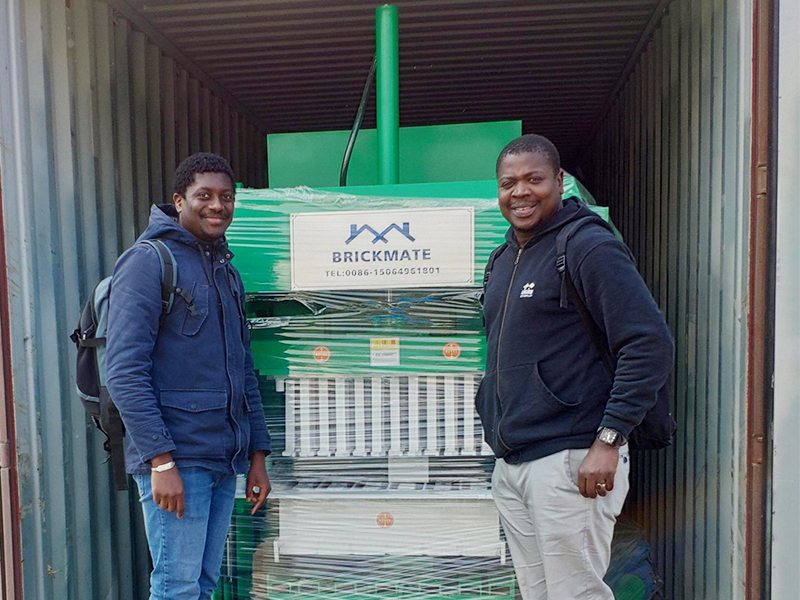
In a significant development, a group of customers from Ghana, Africa, driven by their eagerness to embrace advanced cement brick production technology, embarked on a long - distance journey to visit our company. Having previously placed an order for a substantial batch of cement bricks, their primary objective for this visit was to gain in - depth knowledge of the machine installation and operation techniques. This visit not only laid a robust foundation for the two - way, long - term cooperation but also vividly showcased the company's pre - eminent professionalism in both product quality and service provision.
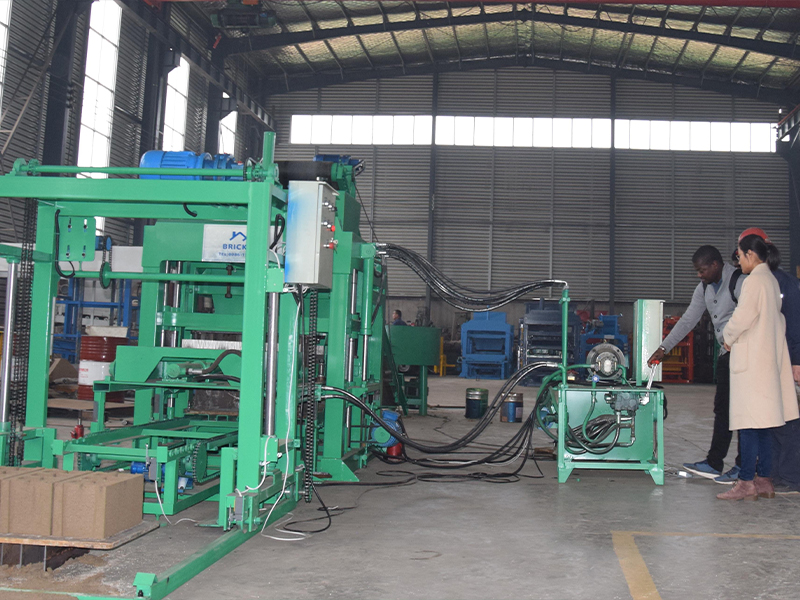
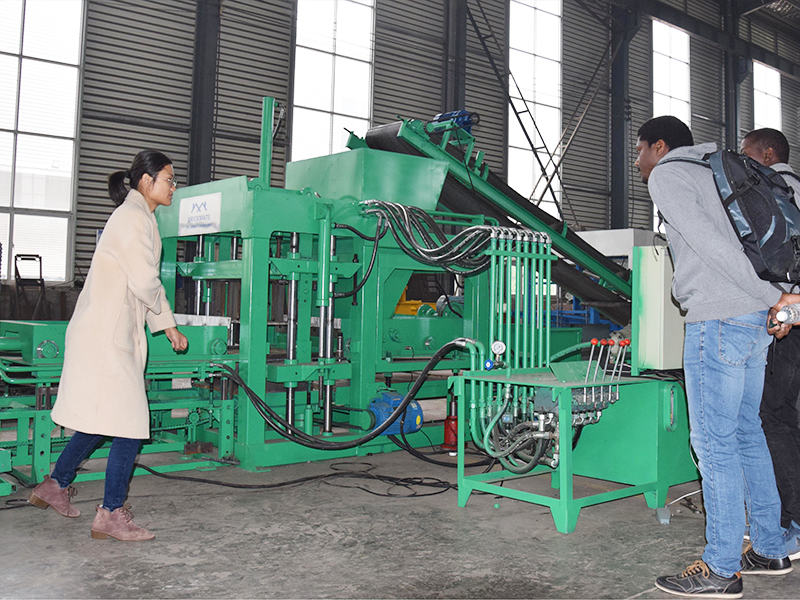
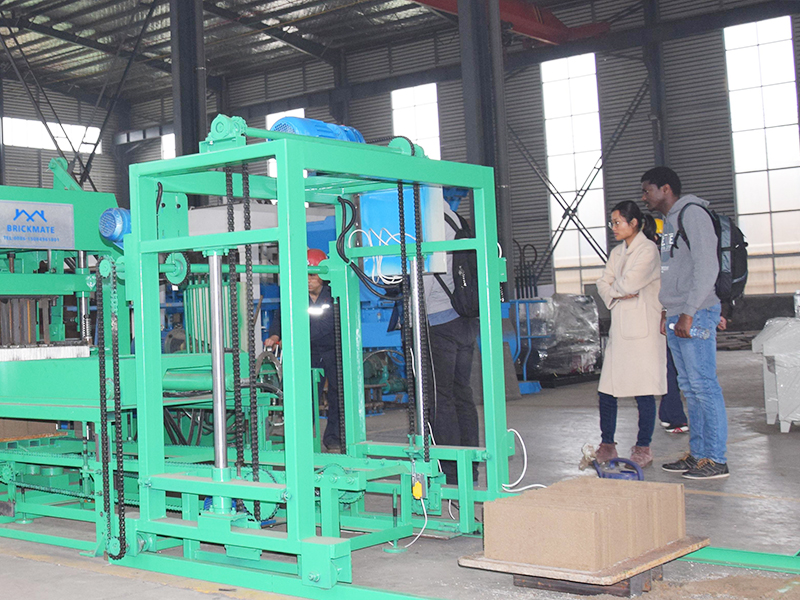
Upon the customers' arrival, our company's technical team sprang into action immediately. With warm hospitality, they extended a heartfelt welcome and painstakingly crafted a comprehensive and well - structured training plan. During the installation - training session, the technical staff, leveraging their extensive expertise, adeptly employed a combination of detailed illustrated manuals and live on - site demonstrations. This approach allowed them to deconstruct the initially complex and intricate installation process step by step, presenting it in a clear and accessible manner. From the fundamental assembly of equipment components to the meticulous process of circuit connection, every single detail was explained with great patience. The technical team left no stone unturned to ensure that the customers had a complete understanding, leaving no room for any potential misunderstandings. They were committed to enabling the customers to master all the installation essentials comprehensively. During the training, [Customer's Name] was completely engrossed, his eyes shining with the eagerness for new knowledge. He frequently posed questions, showing his active engagement in the learning process. After the installation demonstration, [Customer's Name] was visibly elated, his excitement radiating from his face. He exclaimed, "Before I arrived, looking at these numerous and complex machine parts, I was truly daunted. I thought the installation would be an overwhelming and arduous task. However, once your company's technical staff started explaining, those complicated steps became instantly comprehensible! Every detail was dissected so thoroughly that it was as if a bright light had been lit up in my mind. Now, I'm brimming with confidence in the subsequent installation work and have no worries at all!"
Moving on to the operation - training phase, the technical staff took the lead in delivering a seamless and exemplary demonstration. Through a series of precise and coordinated operations, they clearly illustrated the crucial steps, including the machine's startup, stable operation, and accurate shutdown. Subsequently, the customer took the opportunity to operate the machine firsthand. The technical staff closely monitored the entire process, acting as vigilant guardians. The moment any improper operation was detected, they provided immediate corrections. Facing a barrage of professional questions from the customer, such as how to precisely fine - tune the production parameters of cement bricks and how to effectively maintain the machine to prolong its lifespan, the technical team, drawing on their profound professional knowledge and rich practical experience, offered detailed and professional answers. After completing a series of hands - on operational experiences, [Customer's Name] stood beside the smoothly - functioning machine, couldn't help but give a thumbs - up, and sincerely exclaimed, "The operation of the technical staff is so smooth and proficient that it's clear they possess exceptional professional skills! When explaining, they not only made every operation point crystal - clear but also provided practical solutions tailored to common issues in actual production. No matter how many questions I asked, they always greeted me with smiles and were never the least bit impatient. With such all - encompassing guidance, I'm extremely confident in operating the machine on my own! Given this high - quality machine and the excellent technical support, the cement bricks produced are bound to be of the highest quality!"
This visit and the customers' in - depth learning experience serve as a testament to the company's product excellence and technical prowess. It also powerfully demonstrates the company's comprehensive after - sales support system. Looking ahead, the company anticipates building on this positive start to establish a long - term and stable cooperative relationship with the Ghanaian customers. By doing so, we aim to infuse new impetus into the local construction industry in Ghana, facilitating its prosperous development. Simultaneously, the company is determined to further expand its business footprint in the African market, continuously providing high - quality cement brick products and services to a wider range of regions. We aspire to make a significant mark in the global building materials industry.
Operation of the Fully Automatic Non - fired Brick Machine
I. Pre - operation Preparations
1. Site and Equipment Inspection
Ensure that the working area is immaculate, capacious, and devoid of any detritus accumulation. Debris can impinge upon the smooth operation of the equipment and potentially endanger the safety of operators. Thoroughly examine the fully automatic non - fired brick machine and its ancillary equipment, such as the conveyor belts and batch mixers. Verify that all components are securely fastened, with no signs of looseness or damage. Check that all lubrication points have been adequately replenished with high - quality lubricants, and that all transmission components, such as gears, pulleys, and chains, operate with unhindered smoothness.
2. Raw Material Preparation
Procure the requisite raw materials, including Portland cement, silica sand, crushed aggregate, and fly ash, in strict accordance with production requisites. Ensure that the quality and particle - size distribution of the raw materials are in full compliance with the production specifications. Blend the raw materials in a precisely calculated proportion. A high - shear mixer is typically employed to homogenize the mixture thoroughly, achieving an optimal humidity and plasticity. The ideal consistency is such that the mixture can be readily formed into a cohesive mass when compressed by hand and disintegrates easily upon release.
3. Mold Preparation
Select an appropriate mold configuration based on the dimensional specifications and geometric shapes of the non - fired bricks to be produced. Install the mold onto the non - fired brick machine with meticulous precision. During installation, ensure that the mold is accurately positioned and rigidly secured to prevent any displacement or deformation during the production cycle, as this could have a deleterious impact on the quality of the bricks.
II. Operation Start - up
1. Power Connection
Insert the power plug of the non - fired brick machine into the designated power socket or engage the main power supply switch to energize the equipment. Activate the main power switch on the equipment console, followed by pressing the power - on button on the operation panel. At this juncture, the control system of the equipment commences its self - diagnostic and initialization sequence.
2. Parameter Setting
Configure the relevant production parameters on the operation panel, such as the compaction pressure, dwell time, holding - pressure duration, and brick - ejection time. These parameters must be fine - tuned in accordance with the unique characteristics of the raw materials, the mold design, and the production requirements. Generally, the compaction pressure is determined by the inherent properties of the raw materials and the desired compressive strength of the bricks. The dwell time and holding - pressure duration are critical to ensure the complete consolidation and formation of the bricks.
3. Equipment Start - up
Once the parameter setting has been verified as correct, press the start button to initiate the operation of the non - fired brick machine. The equipment begins its operational cycle, commencing with a series of self - checks and initialization procedures, such as validating the functionality of each sensor, and ensuring the proper operation of the conveyor belt drive system.
III. Production Process
1. Feeding
Initiate the feeding system to convey the well - mixed raw materials to the hopper inlet of the non - fired brick machine. The feeding rate must be precisely regulated to ensure a continuous and consistent supply of raw materials without over - loading the system, which could lead to blockages at the feed inlet. The feeding rate can be adjusted by modulating the rotational speed of the feeding auger motor or by fine - tuning the control valve of the feeding equipment.
2. Brick Pressing
Upon the entry of the raw materials into the mold cavity, the hydraulic or mechanical pressing mechanism of the non - fired brick machine springs into action, exerting a precisely calibrated pressure on the raw materials. During the pressing process, closely monitor the variations in compaction pressure and dwell time to ensure the seamless progression of the pressing operation. In the event of any abnormal pressure fluctuations or sub - optimal brick formation, immediately halt the machine to conduct a thorough inspection of the root cause and effect the necessary adjustments.
3. Brick Discharging
Once the pressing cycle is complete, the equipment ejects the fully formed bricks from the mold cavity in accordance with the pre - set brick - ejection time and sequence. The bricks are then conveyed to the designated storage or curing area via a conveyor belt or other automated brick - discharging mechanisms. During the brick - discharging process, ensure that the bricks are smoothly ejected without any risk of damage or jamming within the mold.
4. Quality Inspection
Throughout the production process, conduct regular and comprehensive quality inspections of the manufactured bricks. This includes meticulous checks of the brick dimensions, surface finish, and mechanical strength. If any issues such as dimensional deviations, surface irregularities, or edge chipping are detected, promptly adjust the equipment parameters or conduct a detailed inspection of the mold for any signs of wear or damage.
IV. Shutdown Operation
1. Stop Feeding
When it becomes necessary to shut down the machine, first deactivate the feeding system to cease the supply of raw materials to the non - fired brick machine. Allow the equipment to complete the pressing and ejection of the remaining raw materials within the mold before proceeding to the next step.
2. Turn off the Equipment
Press the stop button on the operation panel to de - energize the main power supply of the non - fired brick machine, thereby halting its operation. Subsequently, switch off the power supply to the operation panel and the main power switch to completely cut off the electrical supply to the equipment.
3. Cleaning and Maintenance
Thoroughly clean all residual raw materials and dust from the equipment, paying particular attention to the mold, conveyor belt, and other critical components. This preventive measure helps to prevent the hardening of raw materials, which could impede future operations. Conduct routine maintenance on the equipment, including a detailed inspection of the wear and tear of all components, prompt replacement of any severely worn - out parts, and the application of fresh lubricants to all moving parts.
The above - described procedures represent the fundamental operational steps of a fully automatic non - fired brick machine. It is important to note that there may be model - specific and manufacturer - specific variations in the actual operation. Prior to commencing operation, it is imperative to carefully peruse the equipment operation manual and receive comprehensive training and guidance from qualified professionals