Talk about lower limb prosthesis-knee joint
The main functional components of lower limb prostheses are knee joints and prosthetic feet, and the prosthetic knee joint is the most important.
Modern science and technology are changing with each passing day, and many technological developments are used in human rehabilitation. Prostheses have also made great achievements in compensating for the lack of human body functions. Especially for patients with missing lower limbs, wearing lower limb prostheses can completely compensate for the lack of human body functions, allowing the patients to take care of themselves, complete their work, and return to society.
The main functional components of lower limb prostheses are knee joints and prosthetic feet, and the prosthetic knee joint is the most important. It can help the human body achieve standing support and flexibility and beauty when walking. Specifically, a good prosthetic knee joint can ensure the stability of the patient during the support period and the flexibility of the swing period, naturally complete walking, and enable the patient to have a good gait, and it is also the decision of the entire prosthetic performance and lifespan factor.
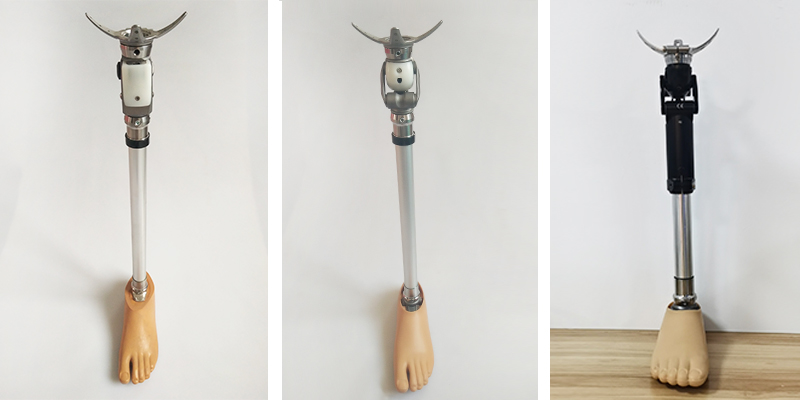
There are different types of prosthetic knee joints, and there are many varieties. Of course, the functions and performances achieved are also different. The space for patients to choose is wide. We can divide the prosthetic knee joint as follows:
Prosthetic knee joint
1. Single axis knee joint
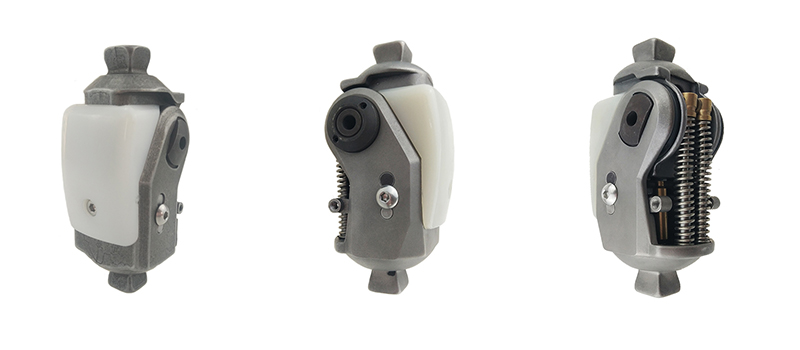
Single-axis knee joint, as the name implies, is a prosthetic knee joint with a single axis of rotation. Its advantage is that it has high flexibility during the swing period, while the corresponding disadvantage is that the support period is not stable enough. It is more suitable for young patients with long residual limbs who have a large amount of activity and good control of the residual limb, and achieve relatively high functional requirements. This is why uniaxial knee joints are generally used for sports knee joints.
2. Multi-axis knee joint
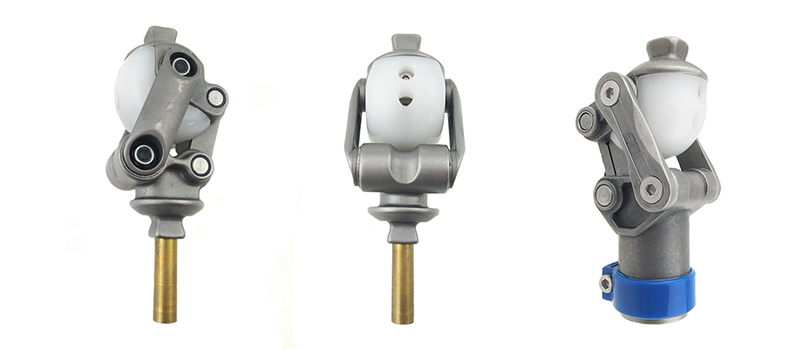
For a single-axis knee with only one knee joint axis, the calf rotation center will not move. However, the rotation center of the knee joint of normal people will move with the flexion and extension action, that is, the rotation center is plural. People have also studied the knee joints of lower limb prostheses according to this situation, and produced multi-axis knee joint products. Most of the multi-axis knee joints use a linkage mechanism, which is designed such that the center of rotation can move up and down and forward and backward in a wide range following the flexion and extension angle of the knee joint. This kind of knee joint is collectively referred to as a "link knee joint", a knee joint composed of four links is called a four-link knee joint, and a six-link knee joint is called a six-link knee joint. The characteristic of the connecting rod knee joint is that when the knee joint is extended, the center of rotation can be much higher than the position of the connecting rod mechanical axis. When the knee joint is flexed, the center of rotation will drop rapidly with the knee flexion and return to the normal position of the knee axis. In this way, the change in the length of the calf during the initial stage of support can reduce the hip extension muscle strength required to stabilize the knee joint. On the other hand, in the middle of swinging or sitting on a chair, the knee shaft height drops to the normal position, and no appearance problems occur. But its flexibility is relatively inferior. Therefore, the multi-axis knee joint is suitable for patients with relatively small amount of activity, low requirements for the functional level of the prosthesis, and high requirements for stability.
3. Bearing lock knee joint
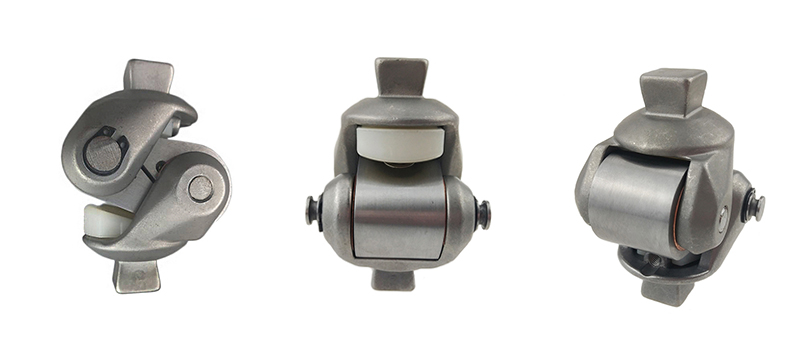
The weight-bearing self-locking knee joint uses the weight to exert pressure on the knee axis to generate resistance and brake. The swing block of the knee joint is connected with the upper part of the joint body through a shaft, and is connected with the lower part of the joint body through the knee joint shaft, and they jointly constitute a locking device based on body weight. This mechanism works with the proper alignment of the knee joint to ensure safety and stability during the support period. It is suitable for amputees who do not like to use locked knee joints with intermediate or low functional level.
4. Fluid (hydraulic or pneumatic) control knee joint
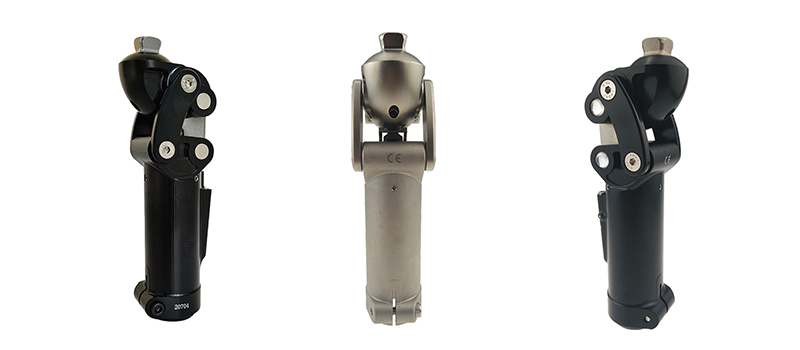
On the basis of single-axis or multi-axis structure design, people design knee joints with additional hydraulic or pneumatic damping control. Hydraulic (pneumatic) damping produces a non-linear resistance that is very similar to muscle strength, improves the stability of the support period and the flexibility of the swing period, and enables the prosthetic wearer to obtain a good gait.
Single-axis hydraulic control of the knee joint, the hydraulic control device on the knee joint can effectively control the motion form of the joint during the swing period. The flexion resistance and extension resistance can be adjusted separately during the swing period. This knee joint uses a special method to connect the hydraulic control device, so even when the knee flexion angle is large, the hydraulic device can still provide high flexion resistance. In addition, the hydraulic device can also provide an additional hydraulic extension end buffer resistance, and to ensure that the knee joint swings to the extended position can get enough buffer force.
Multi-axis air pressure controls the knee joint. When the knee joint is straightened, the instantaneous rotation center of the multi-link mechanism is located at the back and upper part of the knee joint, ensuring the stability of the thigh prosthesis during the support period. This kind of knee joint has a balanced ratio of safety and mobility, and can achieve the purpose of wearing comfort and harmonious movement. This kind of joint is suitable for amputees who have strong mobility and special needs for dynamic swing phase control. It is also suitable for thigh amputees with moderate functional requirements and hip amputees with strong muscle function. Not suitable for amputees with poor stability and mobility.
Want more information on cast aluminum fence parts, victorian gazebo for sale, iron fence ornaments? Feel free to contact us.