Who Uses Waterjet Cutting?
The water jet cutting process provides manufacturers with the flexibility that no other cutting process can offer. A water jet cutting has a wide range of applications and can cut irregular shapes from virtually any material with excellent precision and edge quality.
The provides manufacturers with the flexibility that no other cutting process can offer. A water jet cutting has a wide range of applications and can cut irregular shapes from virtually any material with excellent precision and edge quality. Curves, straight cuts, bores and lettering that were once cut by hand can now be cut with a waterjet in a fraction of the time.
Edge quality is one of the most important reasons why designers specify waterjets. Waterjets produce smooth, uniform burr-free edges. The edge quality produced by the waterjet is a function of speed, pressure, nozzle size and abrasive flow rate. In many cases, the waterjet eliminates the need for secondary finishing, resulting in significant time savings and increased shop efficiency.

Water Jet Nozzle
The main advantages of waterjet cutting
A high-pressure pump that increases the water pressure to approximately 4,000 bar. This makes it possible to cut almost any material.
The nozzle allows very precise and targeted adjustment of the water jet so that it can cut accurately. The nozzle can be equipped with an abrasive mixing line to mix it with water.
The cutting table helps to adjust the position of the nozzle for greater precision.
A preset configuration panel can be used to automatically create the cut shape.
The cutting process is cold, eliminating the risk of melting, tearing, hardening or distortion. The absence of heat and dust creates a safer and more environmentally friendly working environment.

Water Jet Cutting Nozzles
Waterjet cutting is the process of cutting materials with a high-pressure waterjet. For example, waterjet cutting is used in aerospace and vehicle workshops to cut shapes and parts efficiently. For very hard materials, granular abrasives are added to the water jet to increase the cutting force. Almost any material can be cut using a waterjet cutting machine. For example, plastics, metals such as steel, alloys, titanium and copper, rubber, glass, concrete, ceramics and stone.
Glass waterjet cutting
The abrasive waterjet is ideally suited to making internal cuts in glass as it can effectively penetrate most thicknesses and produce superior edge quality. Today, this technology is used worldwide in many glass processing applications, including
Power sockets
Kitchen and bathroom splashes
Mirrors
Table top inlays
Window panels
Frameless shower screens.
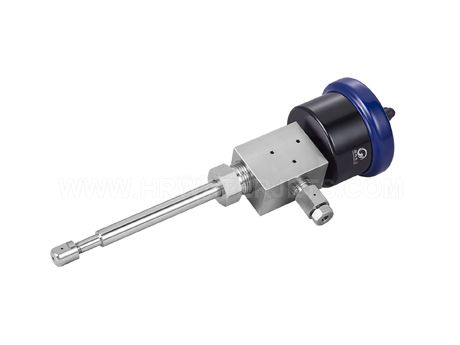
Waterjet Cutting Head Parts
"The waterjet is the best investment we've ever made - it's many times faster than our old process and it cuts a variety of materials. It has simplified our production." (Silverline Waterjet Operator, New South Wales)
Learn more about waterjet spare parts for cutting glass, welcome to contact us today.
Metal waterjet cutting
Waterjets are ideal for cutting a range of standard and rare metals, including
Aluminium
Mild steel and stainless steel
Titanium
Brass
Copper
Chromium-nickel-iron alloys
Alloys
This is because waterjets enable clean cuts with superior edge quality without the need for secondary finishing, making them one of the most versatile and efficient cutting processes available today. The waterjet is also a cold cutting process, which means it is ideally suited to cutting metals as there is no heat affected zone on any part of the workpiece.
Learn more about waterjet cutting head assembly for cutting metal, welcome to contact us today.
If you want to learn more, please visit our website injection molding china, china mold injection plastic supplier, china nylon mold manufacturer.