Master teaches you | How to calculate CNC speed and feed?
Each tool adopts different processing parameters for different processing materials. In the field of milling, tool manufacturers have developed more targeted coating technologies by optimizing tool materials to improve machining efficiency.
Link to WIT MOLD
Each tool adopts different processing parameters for different processing materials. In the field of milling, tool manufacturers have developed more targeted coating technologies by optimizing tool materials to improve machining efficiency.
Through the combination of various elements in the material, we can see thousands of raw materials that can be processed. To process these materials, we must know the processing performance of this material and know how to optimize the processing.
01
The material group to which the workpiece belongs
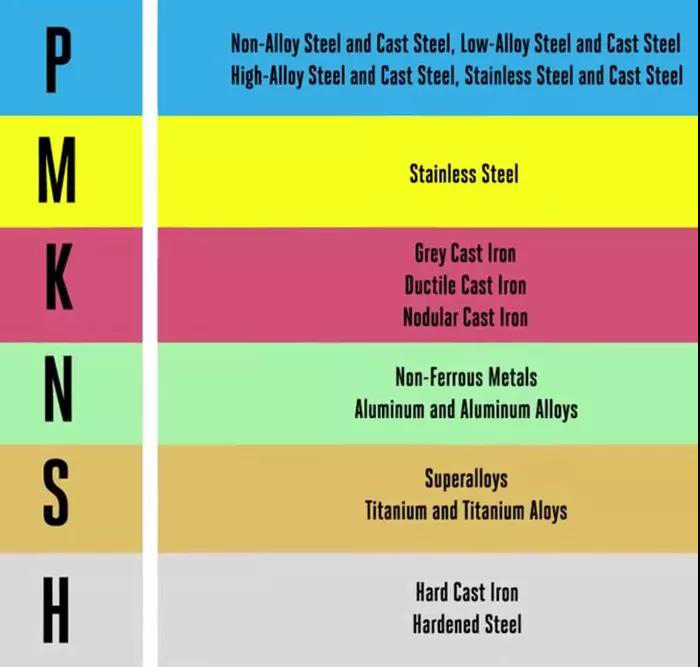
According to the ISO 531: 1966 international standard, the processable materials are divided into 6 categories. They are:
Steel material represented by P;
Stainless steel material represented by M;
Cast iron material represented by K;
Non-metallic materials represented by N;
High temperature material represented by S;
High hardness material represented by H;
According to the tensile strength and hardness of the material, tool manufacturers classify materials in smaller categories in these categories. If we cannot find the processing performance parameters of the material to be processed in these small categories, the most feasible way is to consult the tool supplier, I believe they will be happy to help you solve this problem.
02
Calculation formula
We usually see the following formula in the tool manual

Before talking about this formula, let's recall that we have learned the formula for the circumference of a circle:
C (Circumference)=π (Circumference Ratio)*d (Diameter)
According to this formula, we can conclude that for a tool with a diameter of D, the distance traveled by the outermost point of the tool for each revolution is:
π *D
Then, when the tool rotates at a frequency of n revolutions/1 minute, the distance traveled is:
n*π *D
According to the formula of time (T) × speed (V) = distance (S), the speed Vc of the outermost point of the tool at any point in this period of time is:
Vc=(n*π *D)/1
The following formula is obtained by conversion:
n=Vc/(π *D)
note! Our tool uses millimeter (mm) as the unit, so the unit of speed Vc in the previous formula is: mm/min
After the length conversion (1m=1000mm), we have this common formula:

After simplifying the equation, we have our final version of the formula:

note!
Here, the unit of D (tool diameter) is still mm (millimeter), and the unit of Vc (linear velocity) has become: M/min (meters per minute)
This formula is also applicable to turning processing, in turning, but here D represents the diameter of the blank.
For more information, please visit our website.
Contact us to discuss your requirements of china custom precision injection molding. Our experienced sales team can help you identify the options that best suit your needs.